
On the Road With John Dillinger
A Midwestern Road Trip Through Public Enemy No. 1’s Past
There are some historical figures whose stories are conveniently contained in museums. John Dillinger is not one of them.
His story is scattered across Indiana and the Midwest in old banks, houses, prisons, courthouse squares, cemeteries and seemingly ordinary street corners. Some places are remarkably intact. Others have been renovated beyond recognition or demolished altogether.
That is part of what makes following Dillinger so much fun.
You can build an entire road trip around him, or simply tuck a Dillinger stop into a trip you were already taking.
Going through Greencastle? There’s a bank for that.
Headed toward Chicago? Detour through Crown Point.
Spending the day in Indianapolis? His grave, the only Indianapolis bank he robbed and one of his old gang hangouts are all waiting.
Sometimes the stop itself takes five minutes. The fun is in the journey. Build the playlist, enjoy a new coffee shop and stand on an otherwise ordinary Midwestern sidewalk thinking, John Dillinger was right here.
Of Note: Dillinger mythology began almost while he was still alive, and a century later fact and folklore can be difficult to separate. Consider this less a shrine to an outlaw and more a very unusual way to explore Midwestern history.
Indianapolis: The Beginning, Middle and End
The Slippery Noodle Inn – 372 S. Meridian St.
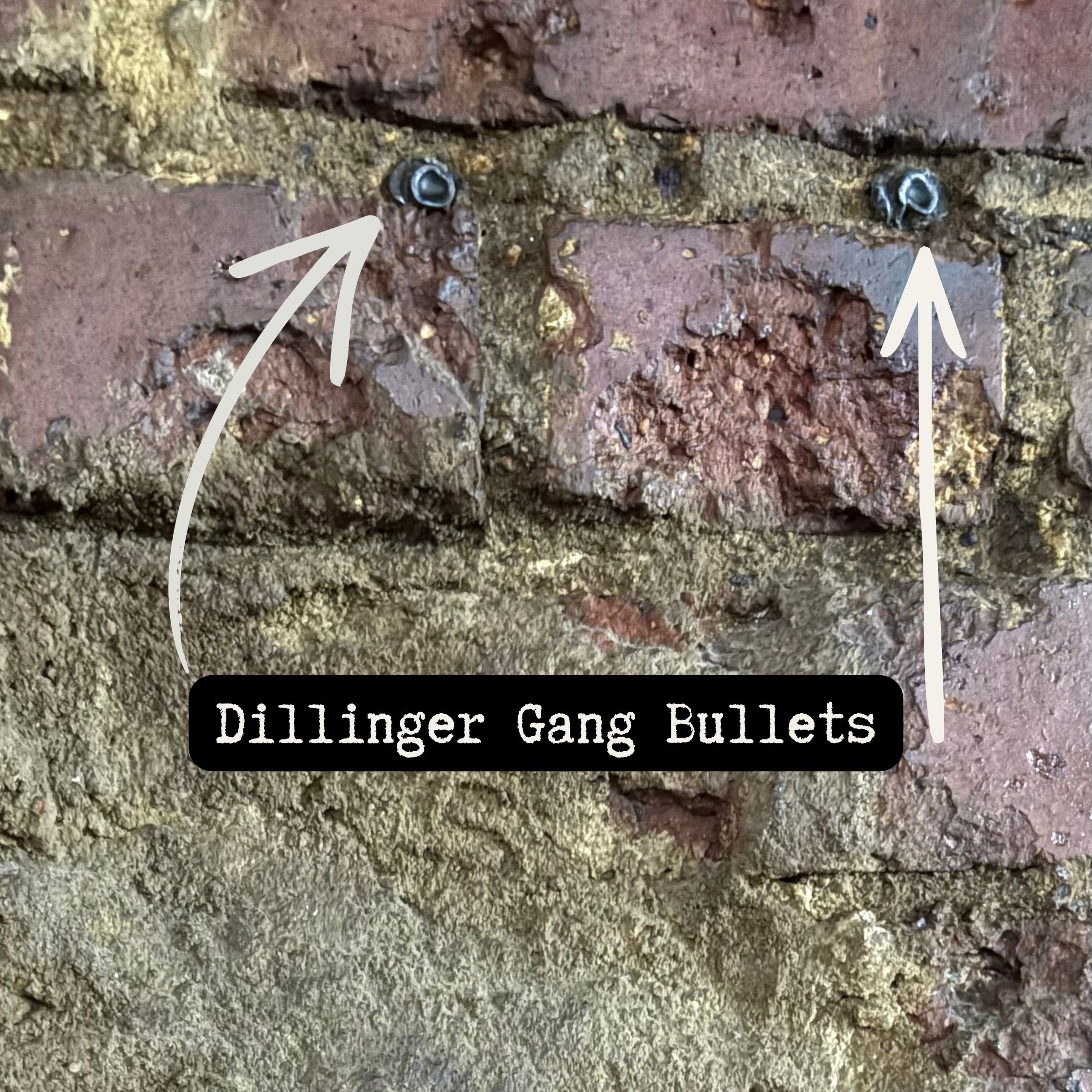
During Prohibition, the Dillinger and Brady gangs reportedly used the rear portion of the Slippery Noodle for target practice. Several bullets remain embedded in the wall. If it’s not too busy, ask your server to show you.
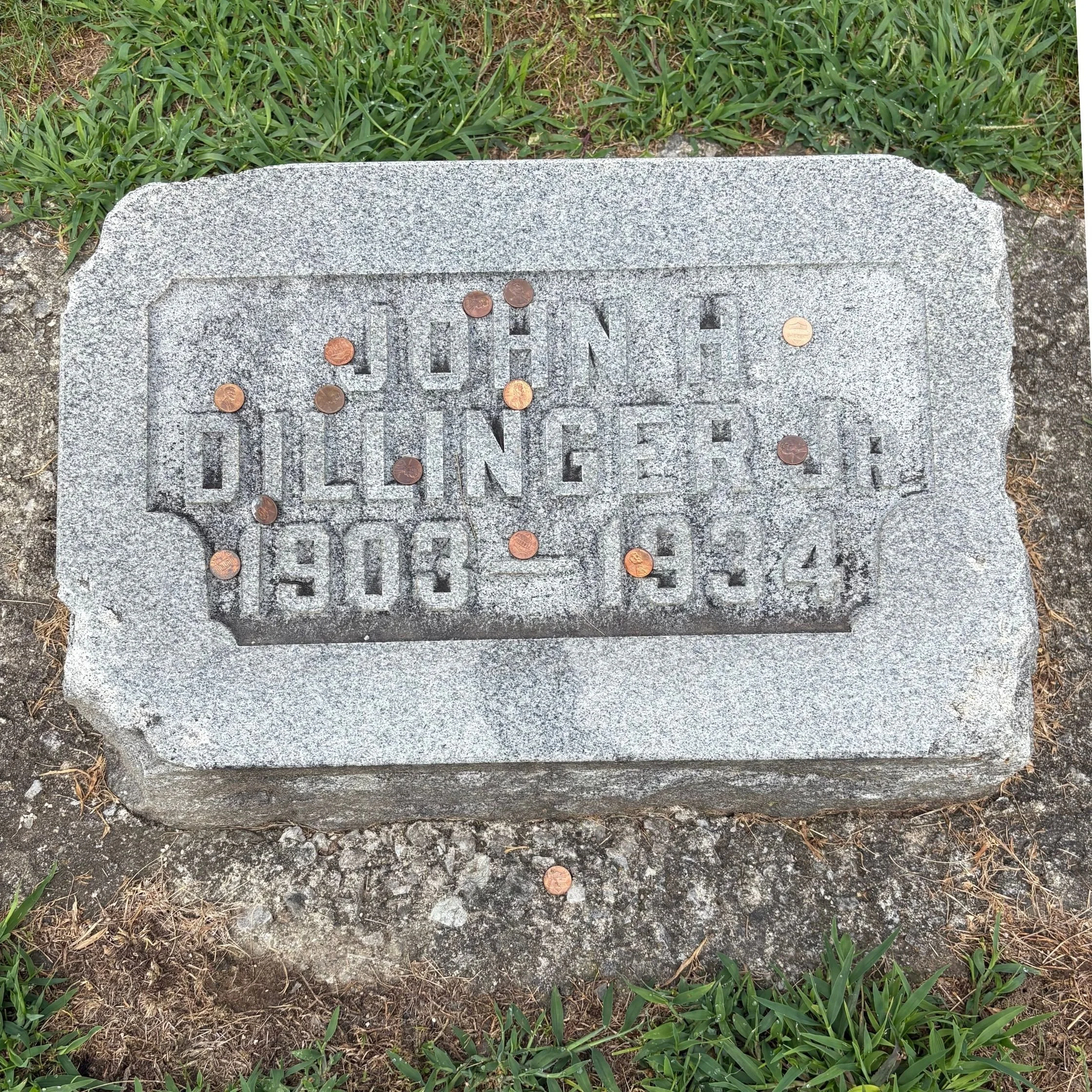
Crown Hill Cemetery – 700 W. 38th St. | Section 44, Lot 94
After Dillinger was killed outside Chicago’s Biograph Theater on July 22, 1934, his body was returned to Indianapolis. Concerned that souvenir hunters might disturb the grave, Dillinger’s father had the casket briefly unearthed and reburied beneath concrete and scrap iron just days after the funeral.
Public School 38 – 2050 N. Winter Ave.
Dillinger’s exact Indianapolis boyhood home is difficult to pin down, but former Public School 38 gives us a tangible connection to his childhood. He attended school here before eventually leaving formal education as a teenager. The building now serves as Greater Love Church.
State Bank of Massachusetts Avenue – 811 Massachusetts Ave.
On Sept. 6, 1933, Dillinger and his accomplices robbed the State Bank of Massachusetts Avenue, his gang’s only Indianapolis bank robbery. The building survives, and the old bank vaults are said to remain visible inside the current-day Goodie & Giggles Toy Store.
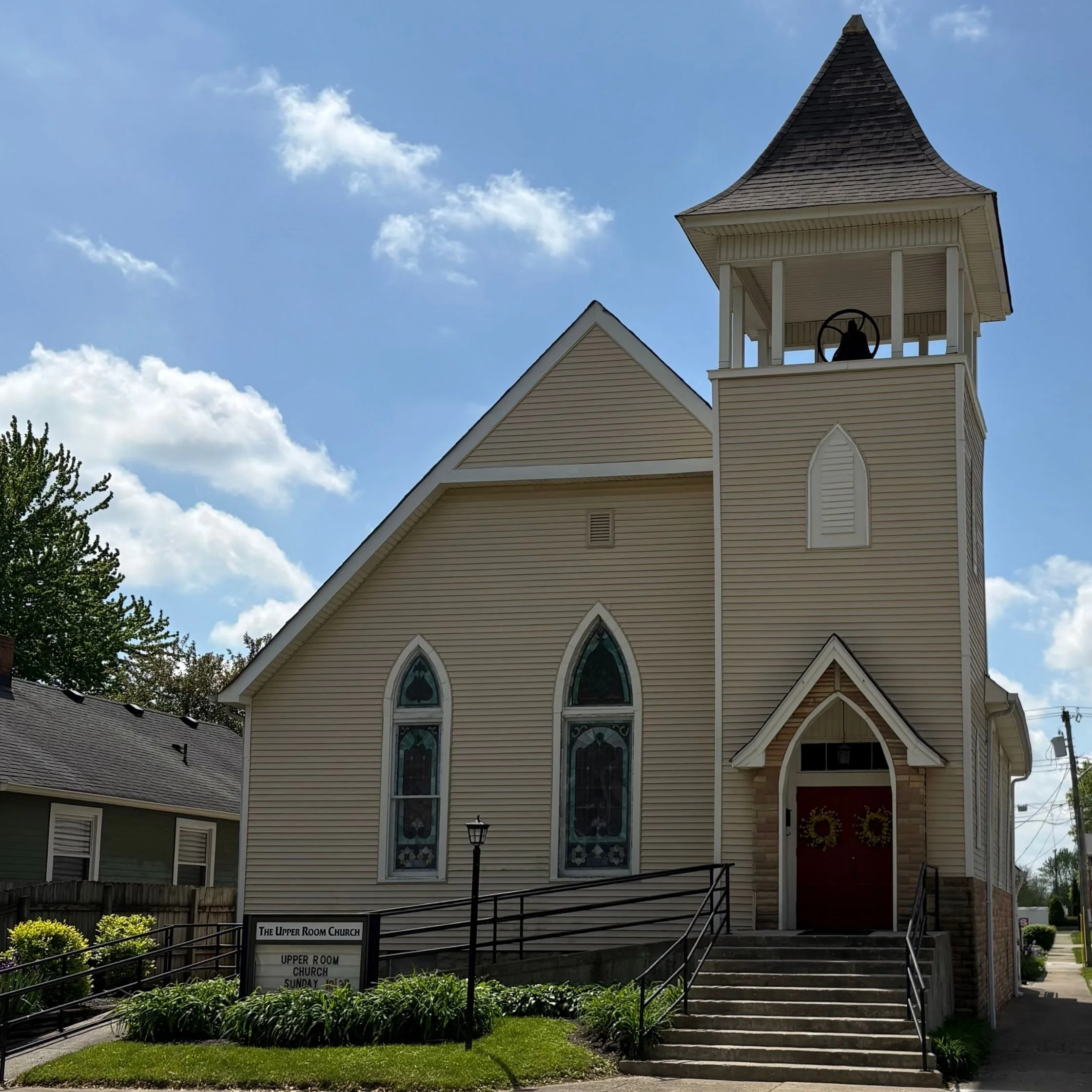
Mooresville: Where Things Started to Go Wrong
Dillinger Family Homestead – 535 State Road 267, Mooresville
Dillinger’s father moved the family to a farm near Mooresville in 1920, reportedly hoping rural life would keep his teenage son out of trouble. The farmhouse still stands as a private residence, so this is strictly a respectful drive-by stop.
First Christian Church – 61 W. Harrison St. , Mooresville
Dillinger and his accomplice, Ed Singleton, reportedly waited near the church before Dillinger attacked grocer Frank Morgan as Morgan walked home on Sept. 6, 1924. The failed holdup eventually sent Dillinger to prison.
Site of Moore & Pearce Pool Hall – 1 W. Main St. , Mooresville
After the attack, Dillinger reportedly went to the Moore & Pearce Pool Hall in the basement of the Lindley Block. The building burned in 1925, so nothing of the original pool hall remains.
For a deeper dive, the Mooresville Public Library offers a self-guided walking tour following the events of Dillinger’s hometown holdup.
Warsaw: Hiding Out
Kosciusko County Old Jail Museum – 121 N Indiana St, Warsaw
Dillinger and Homer Van Meter raided the Warsaw Police Department in April 1934, stealing guns and bulletproof vests. The original police station is no longer standing, but the Old Jail Museum preserves artifacts from the raid, including one of the stolen vests.
Barbee Hotel – 3620 N. Barbee Road, Warsaw
The Barbee Hotel has long been associated with Prohibition-era gangsters, including Dillinger, Baby Face Nelson and Al Capone. Some stories lean heavily on local legend, but the hotel’s gangster reputation has endured. It still operates today as a restaurant and bar.
Auburn: When the Gang Robbed the Police
Historic Auburn City Hall – 202 S. Cedar St., Auburn
On Oct. 14, 1933, Dillinger and two accomplices raided the police station inside City Hall, escaping with a Thompson submachine gun, rifles, pistols, ammunition and bulletproof vests. The 1913 building still stands.
Auburn Cord Duesenberg Automobile Museum – 1600 S. Wayne St., Auburn
The museum has displayed artifacts connected to the raid, including the stolen Thompson, along with a 1933 Ford V-8 linked to Dillinger’s famous Crown Point escape.
Greencastle: The Big One
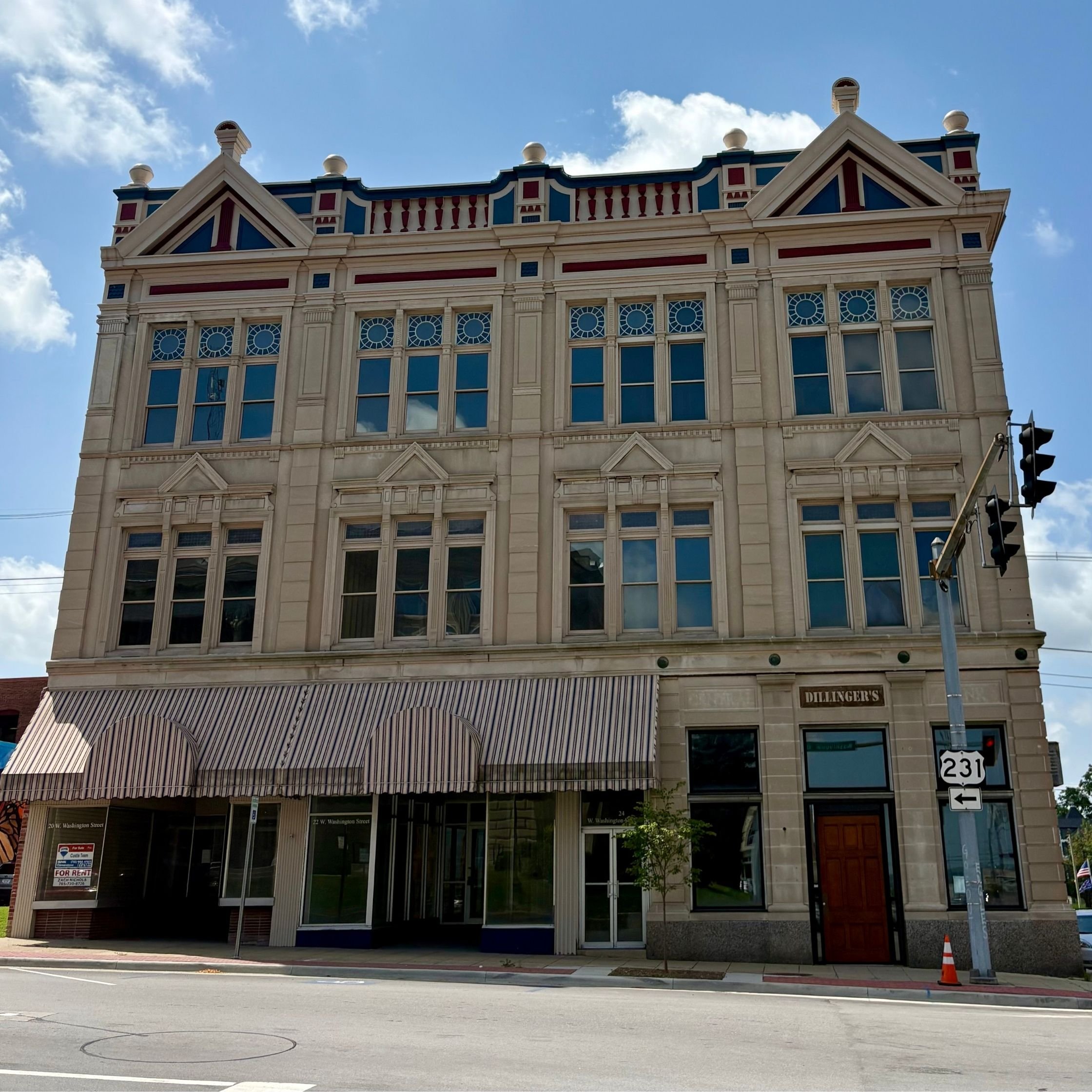
Former Central National Bank – 24 W Washington St, Greencastle
On Oct. 23, 1933, Dillinger and his gang robbed Central National Bank and escaped with roughly $75,000 in cash and securities, generally considered the largest haul of his bank-robbing career. The historic building still stands prominently on the courthouse square and is reportedly being renovated into a B&B.
Terre Haute: Dillinger and Indiana’s “Sin City”
Dillinger Gang Hideout – 2521 Fenwood Ave.
This private home is locally identified as a hideout used by members of the Dillinger gang. Vigo County historian Mike McCormick has tied the property to Kokomo madam Pearl Elliott, who reportedly helped arrange the hideout. Dillinger’s own presence there is less certain, so this is best treated as a Dillinger Gang stop rather than a confirmed residence.
The Copper Bar – 810 Wabash Ave.
Dillinger is said to have spent time at the old Terre Haute House, and local lore places him at its famous copper bar. The hotel is gone, but the bar itself survives at The Copper Bar.
Crown Point: The Escape
Old Lake County Jail and Sheriff’s House – 226 S. Main St.
After his capture in Arizona, Dillinger was returned to Indiana and held in the supposedly escape-proof Lake County Jail. On March 3, 1934, he took control of the jail, locked up guards and escaped in Sheriff Lillian Holley’s car. The famous wooden-gun story remains disputed, but the escape itself helped cement his legend.
Unlike many Dillinger sites, this one can actually be toured. The Old Sheriff’s House Foundation preserves the jail and offers tours through the building and along Dillinger’s escape route.
Lake County Criminal Court Building - 220 S. Main St., Crown Point
While being held in Crown Point, Dillinger posed for one of the most infamous photographs of his career, casually resting his arm on Prosecutor Robert Estill’s shoulder. The seemingly friendly image caused a political uproar and helped ruin Estill’s career. The building later became known as the Hall of Justice and still stands today.
